

Shadow IT is any technology used within an organization without the knowledge or approval of IT. In 2026, AI tools are the fastest-growing Shadow IT category — employees using ChatGPT, Claude, Gemini, and specialized AI tools to do their jobs faster, often without realizing the security and compliance risks this creates.
Why Employees Use Shadow IT
Employees adopt unauthorized tools for one reason: the official tools are slower, less capable, or harder to access than what they can get themselves. A data analyst who finds that Claude can summarize a 200-page report in 30 seconds won’t wait three months for IT to evaluate and approve it. They’ll use it now, send sensitive content to an external AI server, and move on without realizing what happened.
This is rational individual behavior that creates organizational risk. The problem isn’t bad intent — it’s a mismatch between how fast employees can adopt new tools and how fast formal IT processes can evaluate them.
Shadow AI: The Fastest-Growing Category

AI tools are now the dominant Shadow IT concern in 2026. ChatGPT, Claude, Gemini, and hundreds of specialized AI tools are accessible with a personal email address. Employees are using them for drafting communications, analyzing confidential data, writing code, creating presentations, and summarizing sensitive documents.
The specific risk: when an employee pastes client data, financial projections, legal documents, or personal information into a free AI chatbot, that data goes to the AI provider’s servers. Most free AI terms of service allow using that data for model training. Under GDPR, HIPAA, and most data protection regulations, this is a compliance violation regardless of intent.
How Shadow IT Creates Security Vulnerabilities

Unauthorized tools bypass your organization’s security review. They may have weak authentication, poor encryption, inadequate logging, or no compliance certifications. They also create attack surface that IT can’t monitor. If an employee uses a Shadow IT tool and that tool gets breached, the organization’s data in that tool is exposed without any way for IT to respond — because IT doesn’t know the tool exists.

Compliance violations are concrete risks. GDPR requires knowing where personal data goes and having data processing agreements with every vendor. Healthcare organizations face HIPAA exposure. Financial services have similar requirements. Shadow IT systematically breaks these controls at scale, with each individual violation looking small while the aggregate creates significant liability.
How to Discover Shadow IT in Your Organization
Several approaches work: network traffic analysis shows which external services are being contacted, cloud access security brokers (CASBs) flag unapproved cloud services, browser extension audits reveal installed tools, and — most effectively — employee surveys and team conversations. People will tell you what tools they’re using if you ask without threatening consequences and frame it as a process improvement exercise.
Managing Shadow IT Without Killing Productivity
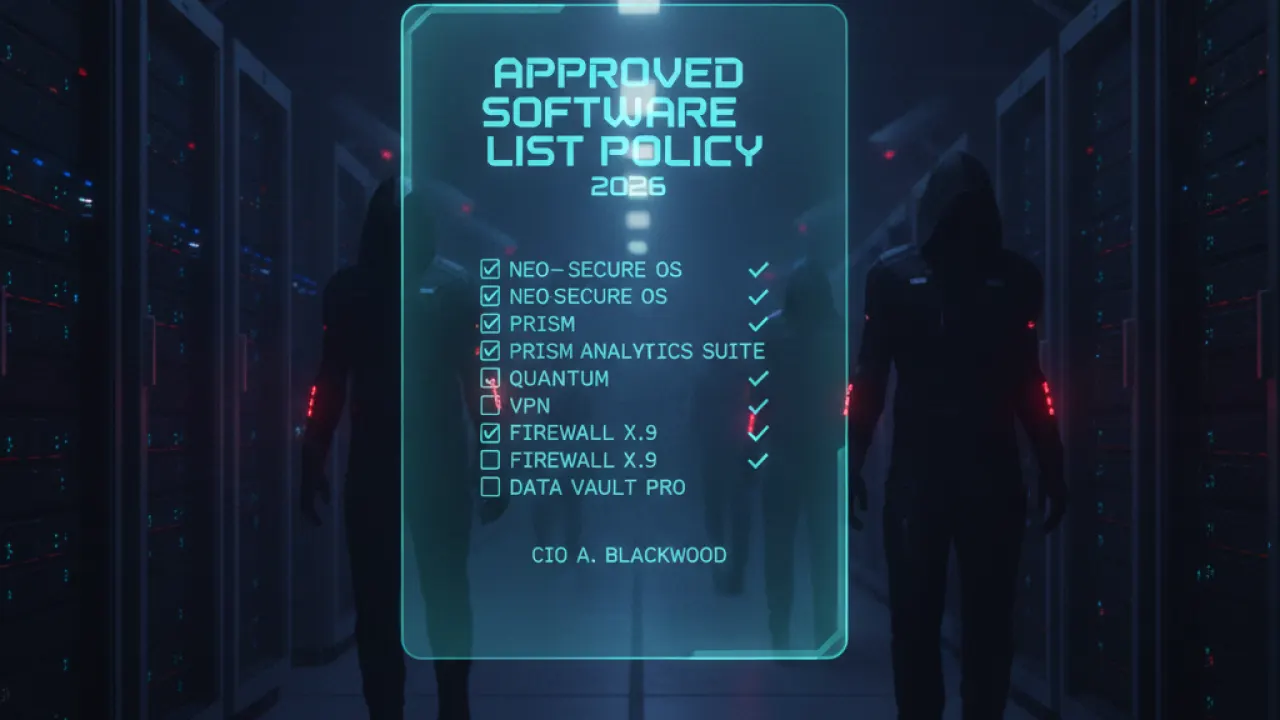
The wrong response is a blanket prohibition. This drives usage underground without solving the underlying problem: official tools can’t match what employees can access on their own. Effective approaches include: creating fast evaluation paths (two-week security review for commonly requested tools, not three-month committees), providing sanctioned alternatives (approved AI tools that meet security requirements), and educating employees about why restrictions exist rather than just stating rules.

The goal isn’t zero Shadow IT — it’s reducing the risk of Shadow IT while not completely blocking the productivity gains that make employees want to use these tools in the first place. Organizations that make the approved path easy reduce Shadow IT more effectively than those that make it difficult while banning everything else.
Understanding Shadow IT risk is part of good cybersecurity habits. And our phishing guide guide covers the related topic of how employees at organizations with weak security controls become more vulnerable to targeted attacks.
Does your organization have a Shadow IT policy, and do you think the approved software list reflects what people actually need? Leave a comment with how your workplace handles the tension between security and productivity.