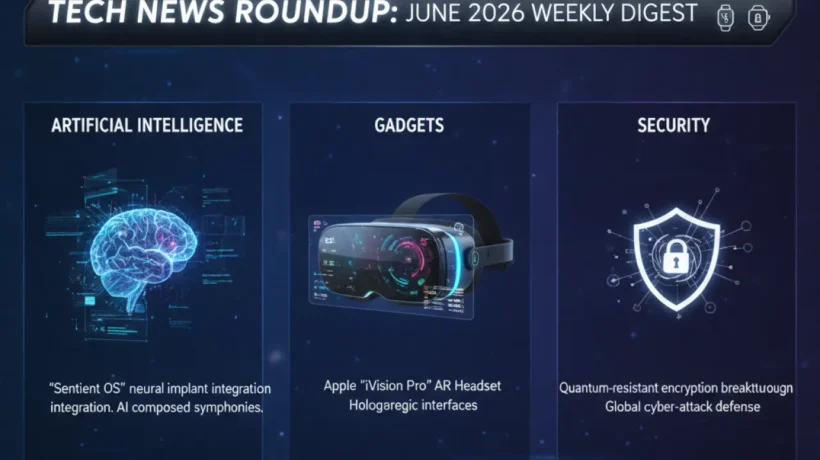

The past week in technology brought new AI model updates, hardware announcements, a significant data breach disclosure, and continued movement in the electric vehicle software space. Here’s what happened and why it matters.
OpenAI Expands ChatGPT Memory to More Countries
OpenAI rolled out expanded memory features for ChatGPT to additional countries in Europe and Asia this week. Memory lets ChatGPT remember details from previous conversations, such as your name, job, communication preferences, and recurring topics you discuss.

Users can view and delete what ChatGPT remembers at any time through the Settings menu. You can also tell ChatGPT “forget this” during a conversation and it removes that specific memory.
The expansion is notable because memory rollouts have been cautious. OpenAI delayed the feature in the European Union due to GDPR compliance requirements. The broader rollout suggests those compliance questions have been addressed.
For users who’ve been using ChatGPT without memory enabled, turning it on significantly changes the experience. The assistant becomes more useful for ongoing projects and regular tasks because it builds context over time rather than starting fresh each session.
Apple Announces New Developer APIs Ahead of Fall Software Release

Apple released new documentation and beta APIs for features coming in the fall software cycle. The announcements this week focused on on-device AI processing improvements, new health data frameworks, and expanded Vision Pro developer tools.
The on-device AI improvements are significant for privacy-focused users. Apple’s approach routes more computation through the iPhone or Mac processor rather than sending data to a server. For features like document analysis, voice transcription, and intelligent photo search, this means your data doesn’t leave your device.
Developers building apps that use health data will have more granular access to sensor readings from Apple Watch Series 10 and later. Heart rate variability, sleep staging data, and blood oxygen readings are among the expanded API access points.
Major Data Breach: 40 Million Records Exposed

A large-scale data breach disclosure this week affected a financial services firm operating across the USA, UK, Canada, and Australia. Approximately 40 million customer records were exposed, including names, email addresses, phone numbers, and partial payment card data.
The breach occurred several months before disclosure, which is unfortunately typical. Companies often take 200 or more days to detect a breach, and disclosure takes additional time while legal and regulatory processes run.
If you’ve received a breach notification letter or email this week, treat it as real and change the relevant passwords immediately. Use a unique password for that account. Enable two-factor authentication if the service supports it. If payment card data was included, consider requesting a new card number from your bank.
Our guide on basic cybersecurity tips explains how to respond to a data breach notification step by step, and why a password manager makes dealing with these situations much faster.
EV Software Updates: Over-the-Air Improvements Across Major Brands

Several major electric vehicle manufacturers pushed significant over-the-air software updates this week. Tesla, Rivian, and Polestar all delivered changes that affected charging behavior, navigation routing, and driver assistance features.
Tesla’s update improved charge curve optimization, which should extend battery longevity for users who regularly charge above 80%. Rivian’s update added route planning through charging stops that communicates with the vehicle to precondition the battery before arrival. Polestar’s update expanded pilot assist functionality to more highway types in Europe.
The increasing pace of OTA updates means modern EVs are genuinely different vehicles compared to what was on the lot when they were sold. This is a software industry dynamic applied to physical hardware, and it’s still something new car buyers are adjusting to.
AI Startup Funding: Where the Money Is Going in Mid-2026

Venture capital data for the first half of 2026 shows continued concentration of AI investment. Infrastructure-layer companies (GPU clusters, model serving, fine-tuning platforms) are taking the largest share. Application-layer AI startups are getting funded but at lower valuations than in 2024.
The standout categories attracting money in 2026 are: AI for healthcare documentation (clinical note automation), AI for legal document review, and AI-native customer support that handles complex cases without human escalation.
General-purpose AI apps that compete directly with ChatGPT and Claude are having the hardest time raising. Investors are looking for AI applied to specific, well-defined workflows with measurable ROI rather than general AI assistants.
For developers and entrepreneurs, this signals where the market is heading. Vertical-specific AI tools with clear productivity gains are what gets funded and what enterprises are willing to pay for in 2026.
Quick Hits: Other Stories Worth Noting
- Firefox 128 released with improved privacy protection for DNS over HTTPS and tracking protection improvements.
- Raspberry Pi 5 stock is more consistently available as supply chain constraints have eased. Good time to start that home server project.
- Google Cloud announced new pricing for Gemini API calls that brings costs down approximately 20 percent for standard tiers.
- Signal added group call improvements that support up to 50 participants, making it more viable for small team meetings where privacy matters.
Stay current with the latest AI news for weekly coverage of AI developments. And if any of the cybersecurity news this week prompted you to review your own setup, the full guide on report phishing emails covers the most common attack vectors to defend against.
What story from this week caught your attention? Leave a comment with the tech news item you’re watching most closely heading into next week.