The week of June 29 brought AI updates from Apple and Google, a significant ransomware attack targeting healthcare, developments in AI-powered gaming, and early results from climate tech AI applications. Here’s the summary.
Apple Intelligence: More Features, More Regions
Apple Intelligence rolled out to additional regions this week, bringing AI writing tools, image generation, and enhanced Siri to users in the UK, Canada, and Australia with full feature parity. Previous regional releases had excluded some features due to regulatory review. The full feature set is now available across all major English-speaking markets.
The Clean Up tool in Photos, which removes unwanted objects from photos using AI, received a significant quality improvement in the latest iOS beta. Early testers report results that now rival paid photo editing software for common use cases like removing a stranger from a tourist photo or erasing an object from a room photo.
Apple also released documentation confirming that Private Cloud Compute, the system that processes AI requests requiring cloud processing, now supports independent security research and verification. This allows third-party security researchers to verify Apple’s privacy claims independently — a step that other AI providers haven’t taken.
Google’s AI Features Come to Older Android Devices
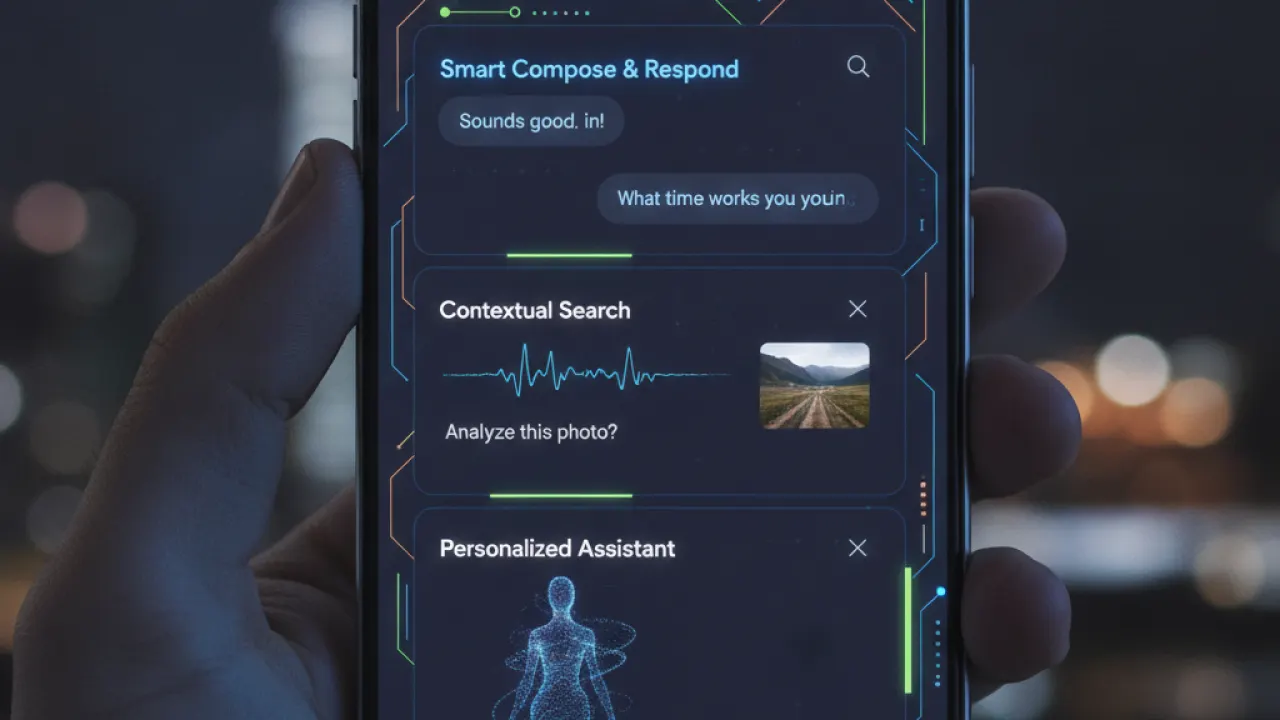
Google announced that several Gemini AI features previously limited to Pixel 8 and newer devices are coming to older Android phones through software updates. The expansion covers Pixel 6 and newer, and selected devices from Samsung, OnePlus, and other manufacturers running Android 13 or higher.
Features included in the rollout: Gemini as the default assistant (replacing Google Assistant), Circle to Search improvements, and AI-powered summary generation in Google Messages. The on-device processing requirements for these features have been reduced through model optimization, making them viable on mid-range hardware without dedicated NPU chips.
Healthcare Ransomware Attack: What Happened
A ransomware attack hit a major healthcare network operating across six US states this week. Approximately 140 hospitals had to revert to manual procedures for 72 hours while systems were secured and restored. The attack encrypted financial and administrative systems but did not compromise the clinical systems directly used for patient care.
The attack group used a vulnerability in a third-party software vendor’s update system to gain initial access — a supply chain attack vector that’s increasingly common. Organizations were compromised through a software update from a legitimate vendor rather than through phishing or direct intrusion.
This type of attack is why cybersecurity professionals emphasize supply chain security and software bill-of-materials (SBOM) auditing. Your security is only as strong as the least-secure vendor in your supply chain. For individuals, the lesson is about keeping all software updated — our guide to basic cybersecurity tips covers why updates matter as a security practice.
AI-Powered NPCs Are Changing Game Development

Nvidia’s ACE (Avatar Cloud Engine) technology, which enables AI-powered non-player characters that can have genuine conversations rather than scripted dialogue, reached a milestone this week when the first major commercial game shipped with it. The detective RPG “City of Whispers” features AI-driven characters that respond to player questions, remember previous conversations, and can be genuinely surprised by information the player shares.
The gaming implications are significant. NPC dialogue has been one of the biggest limitations on immersive storytelling in games — players learn to exhaust scripted dialogue trees quickly and the illusion of a living world breaks. AI-driven characters that generate responses in real time change that dynamic fundamentally.
The technical challenge is cost. Running inference for dozens of NPCs simultaneously in a real-time game environment is computationally expensive. Nvidia’s approach offloads this to cloud inference, which adds latency requirements. Current implementations work for slower-paced dialogue but not yet for fast-action scenarios where response latency matters.
AI for Climate: Grid Optimization Shows Early Promise
A research partnership between DeepMind and several European grid operators published results this week showing that AI-driven electricity grid balancing reduced the cost of integrating variable renewable energy by approximately 18% during a six-month trial. The AI system predicts renewable output from weather forecasting, manages grid storage deployment, and coordinates demand flexibility programs to reduce reliance on expensive peaker gas plants.
Climate technology applications are one of the most promising areas for AI investment in 2026 because the datasets (weather, grid operations, sensor networks) are large and structured, the optimization problems are well-defined, and the potential impact is significant enough to justify compute costs.
Quick Tech News This Week
- Spotify launched AI DJ enhancements that adjust the music mix in real time based on listening context, including time of day and activity.
- Cloudflare reported a 340% increase in AI-generated bot traffic on websites they protect compared to Q1 2025, creating challenges for legitimate traffic filtering.
- Qualcomm announced the Snapdragon 8 Gen 4 will launch at the end of 2026 with a dedicated NPU capable of running 100B parameter models at reduced quality levels.
- Epic Games settled a long-running case with Apple, gaining access to the iOS App Store in the EU under new competition rules.
Stay current with our latest AI news for weekly AI coverage. And if the ransomware news this week prompted you to review your own security, the best free password manager guide is the most impactful place to start.
Which story from this week caught your attention? Drop a comment with what you’re watching and why it matters to you.