
Monday June 29 brings new AI tool launches, research findings from multiple labs, and capability benchmark updates across the model frontier. Here’s the digest.
New AI Tools Launched This Week

Several notable tools launched this week. Notion Calendar AI analyzes your schedule patterns and suggests optimal focus blocks, meeting times, and buffer periods based on your historical productivity data. Available to all Notion users this week with rolling access. Canva Magic Design 3.0 received an update that generates complete, brand-consistent slide decks from a single prompt, including layout variation, image selection from licensed stock, and typography matching your brand guidelines. Cursor 0.45 shipped with improvements to its multi-file editing mode and better understanding of large monorepos.
On the API side, Groq expanded its low-latency inference API to include Llama 4 Scout at speeds that enable conversational applications with near-zero perceptible delay. This matters for real-time voice and chat applications where latency is the primary user experience constraint.
Research: AI Efficiency Improvements Continue

Two efficiency papers published on arXiv this week showed meaningful compute reduction for frontier model inference. The first, from a European academic consortium, demonstrated 40% reduction in inference compute for a 70B parameter model through improved attention pattern pruning during inference — cutting which attention heads to compute for each token. The second, from a US academic team, showed that models can be quantized to 4-bit precision for most layers with under 1% quality degradation on standard benchmarks, with the key insight being which specific layers to keep at higher precision.
These efficiency improvements matter because inference cost is the primary economic constraint on commercial AI deployment. A 40% inference compute reduction translates directly to 40% lower cost-per-query or 40% higher throughput for the same hardware.
Safety Research: Honesty and Calibration

Anthropic published a detailed post on their approach to AI honesty, distinguishing between several related properties: truthfulness (only asserting things believed to be true), calibration (expressing appropriate uncertainty), transparency (not pursuing hidden agendas), and non-deception (not creating false impressions through technically true statements or framing). The post is unusually specific about the challenges of implementing these properties in a trained model and the trade-offs between them. Worth reading for anyone interested in AI safety or the practical difficulties of building honest AI systems.
Benchmark Updates: The Frontier Keeps Moving
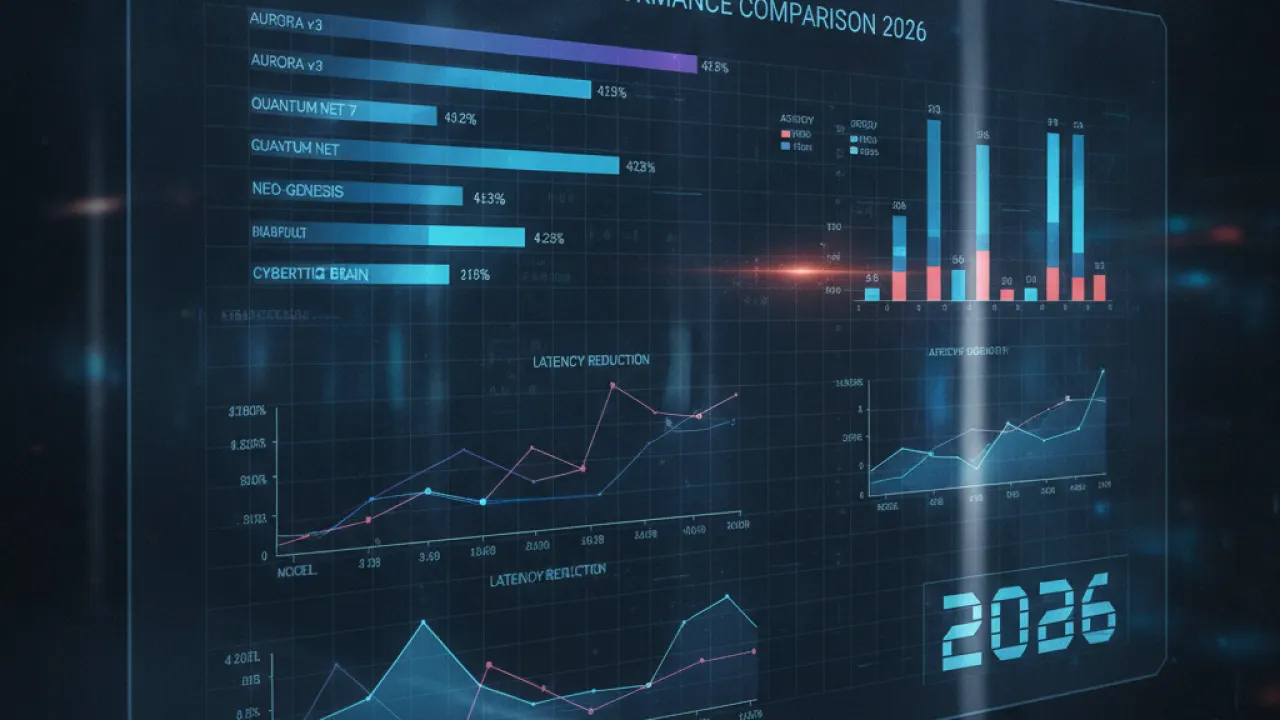
LMSYS updated its Chatbot Arena leaderboard with new evaluations. The current leaders in overall quality: GPT-4.5 (OpenAI), Gemini 2.5 Pro (Google), and Claude Opus 4.8 (Anthropic) continue swapping positions within margin of statistical error. On reasoning-specific benchmarks, GPT-4.5 leads. On long-document and multimodal tasks, Gemini 2.5 Pro leads. On writing quality and instruction following, Claude leads depending on the evaluator. No clear overall winner across all categories — the right model depends on your specific task.
Open Source: Llama 4 Quantized Available for Consumer GPUs

The community released optimized quantized versions of Llama 4 Scout this week that run on consumer GPUs with 12GB VRAM or less. The Q4_K_M quantization format produces results within 3% of full-precision on most benchmarks while fitting the model comfortably on an RTX 4070 or similar GPU. This makes Llama 4’s multimodal capabilities (understanding both text and images) accessible for local deployment without enterprise hardware. See our guide to best AI tools for how to run these models on your own hardware with Ollama or LM Studio.
Stay current with the full AI picture through our weekly roundups. And for practical AI tools you can use today, our complete guide covers everything from research tools to coding assistants across every category.
Which AI development from this week caught your attention? Leave a comment with what you’re most interested in following from the AI space right now.