


2027 is already shaping up to be one of the most important years in tech history. From AI agents taking on real jobs to quantum computers hitting new records According to Wikipedia’s quantum computing overview, the field has accelerated faster in the last two years than in the previous decade., the stories we’re tracking this year could change almost every part of daily life.
At TechDeft, we follow tech news every day so you don’t have to dig through dozens of sources. This is our 2027 tech news preview: the big stories, what they mean for you, and what to watch as the year unfolds.
Why 2027 Feels Different From Every Year Before It

Every year, someone says it’s the biggest year in tech. But 2027 has something different going on. Multiple major technologies are reaching turning points at the same time. That doesn’t happen often.
Think about the last time AI, quantum computing, clean energy, and new computing hardware all hit major milestones in the same 12-month window. It’s rare. And when it does happen, the effects tend to stack on top of each other.
Here’s what makes 2027 stand out from recent years:
- AI systems have moved from assistants to autonomous agents that complete multi-step tasks on their own.
- Quantum computing has crossed error-correction thresholds that researchers once thought were years away.
- Clean energy adoption is accelerating faster than government targets in many countries.
- Chipmakers are introducing new processor architectures that break away from decades-old designs.
- Biotech is applying AI to drug discovery with results that are compressing the research timeline dramatically.
- Spatial computing is moving from expensive niche devices into mainstream consumer products.
- Cybersecurity threats are growing more complex as AI tools become available to both defenders and attackers.
Each of these stories could carry a year on its own. In 2027, they’re all happening at once. That’s why this is the year we’re watching closely.
We’re not here to hype things up. Some of what’s being promised won’t arrive on time. Some technologies will hit walls. But the direction of travel is clear, and the stories we outline below are backed by real products, real funding, and real research already in motion.
AI Agents Are Taking on Real Work
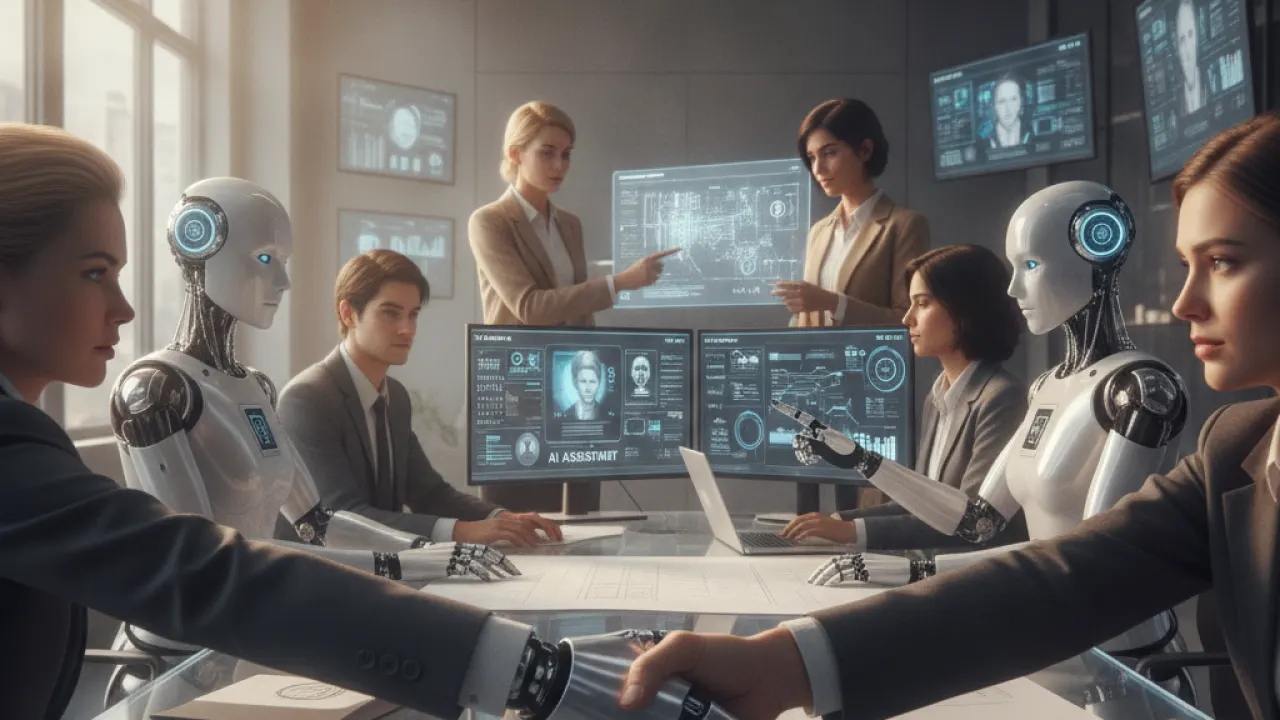
For the past few years, AI has mostly been a helper. You type a prompt, it gives you an answer. That’s still happening, but in 2027, the bigger story is about AI agents. These are systems that don’t just answer questions but actually do things.
An AI agent can browse the web, write code, send emails, book appointments, and coordinate with other agents, all without a human approving each step. It’s a shift from AI as a tool to AI as a worker.
What AI Agents Can Do Right Now
The current generation of agents isn’t perfect. They make mistakes. They need guardrails. But they’re already handling tasks that used to require a full-time employee. Here’s a look at what’s working in real deployments:
- Software development agents write, test, and debug code in loops, reducing the time engineers spend on routine coding tasks.
- Customer service agents resolve common issues without escalating to a human, handling thousands of conversations at once.
- Research agents scan academic papers, summarize findings, and identify gaps in minutes instead of days.
- Financial agents monitor portfolios, flag anomalies, and draft reports based on real-time data.
- Marketing agents generate content, schedule posts, analyze performance, and adjust campaigns on the fly.
- Legal agents review contracts, flag clauses, and summarize agreements with fewer errors than junior staff.
- Healthcare agents assist with medical coding, appointment scheduling, and patient record organization.
- Supply chain agents track shipments, predict delays, and reroute logistics in real time.
- Sales agents qualify leads, send follow-up messages, and update CRM records without human input.
- Security agents monitor networks, detect unusual behavior, and trigger alerts faster than human analysts.
The Questions Everyone Is Asking
The rise of AI agents raises real concerns. Who is responsible when an agent makes a costly mistake? How do you audit what an agent did? Can you trust an agent with sensitive data?
These aren’t hypothetical questions. Companies are already wrestling with them. The legal and regulatory frameworks are far behind the technology. Expect 2027 to be the year when governments start putting real rules in place, not just guidelines.
The job market question is the one most people care about. The honest answer is that AI agents will replace some jobs, change others, and create entirely new ones. The details are still playing out. We’ll be covering the real numbers and real stories as they come in throughout the year.
Quantum Computing Hits a Real Milestone
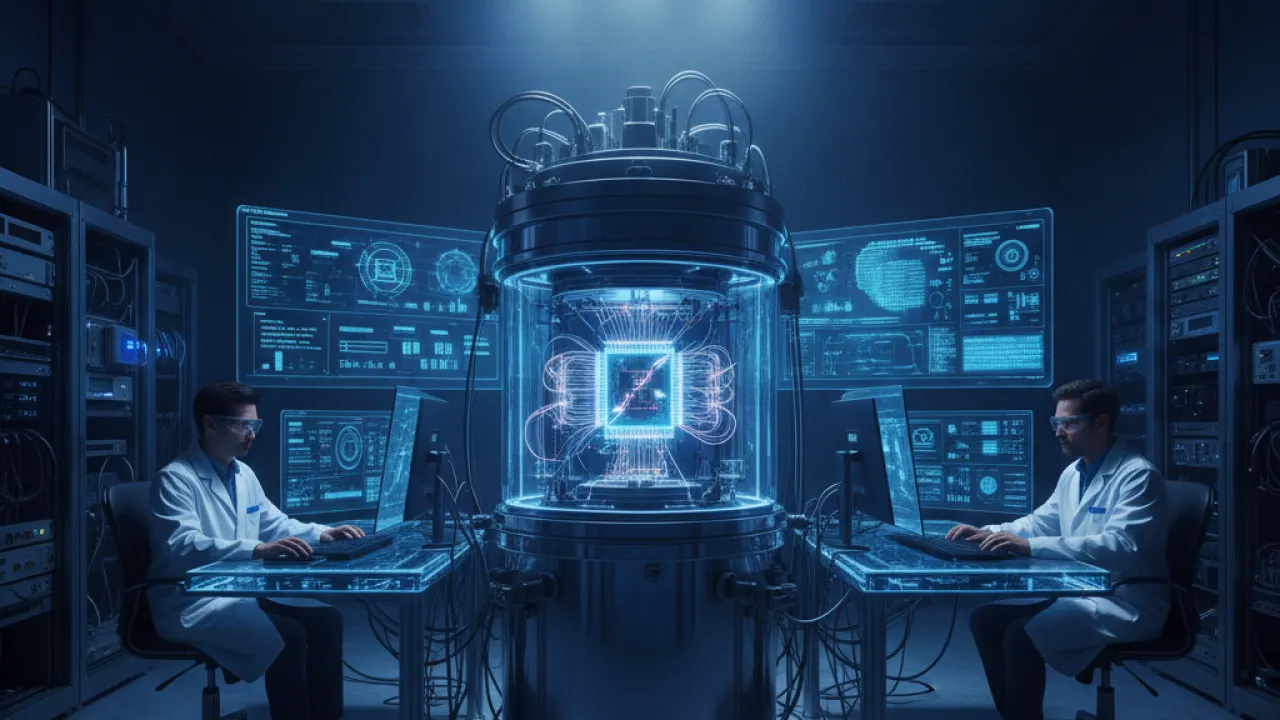
Quantum computing has been “just around the corner” for a long time. In 2027, the corner is finally here, at least for some specific use cases.
The key development isn’t just raw qubit counts. It’s error correction. Classical computers make very few mistakes. Quantum computers make a lot of them because qubits are unstable. Fixing that problem has been the central challenge of the field for decades.
Why Error Correction Changes Everything
In late 2026 and early 2027, several research labs and companies demonstrated error-correction techniques that bring quantum computers closer to being practically useful. That matters because without error correction, quantum computers are fast but unreliable. With it, they become serious tools.
Here’s what the quantum milestone means in plain terms:
- Drug discovery could be dramatically faster, since quantum computers can model molecular interactions that are too complex for classical hardware.
- Encryption faces a new threat, because quantum computers can theoretically break many of the encryption methods the internet relies on today.
- Logistics and optimization problems that involve millions of variables could be solved in minutes instead of hours or days.
- Financial modeling could run scenarios far faster than current systems, giving analysts much more detailed risk assessments.
The encryption angle is the one governments are most nervous about. Intelligence agencies are already upgrading to post-quantum cryptography standards. Private companies are starting to follow. It’s not a crisis yet, but the clock is ticking.
Who Is Leading the Race
IBM, Google, Microsoft, and a handful of startups are all competing for quantum leadership. China has also invested heavily in state-funded quantum research. The competition is geopolitical as much as it is technical.
In 2027, the story isn’t which company has the most qubits. It’s which one can run the most reliable and useful computations. That’s a different race, and the leaderboard looks different depending on which benchmark you use.
We’ll be tracking real-world applications as they’re announced, because the hype in quantum computing has always outpaced the reality. The goal here is to tell you what’s actually happening, not what companies want you to believe.
Clean Energy Is Winning on Price, Not Just Politics

Something important shifted in the past two years. Clean energy stopped being purely an environmental argument and became an economic one. Solar, wind, and battery storage are now cheaper than new fossil fuel plants in most of the world. That’s not an opinion. That’s a number.
In 2027, the clean energy story is about what happens when economic logic takes over. Governments, corporations, and individuals are all making the same calculation: clean energy is cheaper over time, so it makes financial sense to switch.
The Electric Vehicle Shift
Electric vehicles are part of the same story. Battery costs have fallen sharply. Charging networks are expanding. Range anxiety is decreasing. In several major markets, EVs are now cheaper to own over five years than comparable gas-powered vehicles.
The 2027 EV landscape looks like this:
- Solid-state batteries are entering limited production, promising faster charging and longer range than current lithium-ion packs.
- Charging speeds are improving so that a 20-minute stop can add 200 miles of range on newer vehicles.
- Affordable EVs under $25,000 are finally reaching markets that previously had only expensive options.
- Fleet adoption by delivery companies and public transit systems is accelerating faster than consumer adoption.
- Grid integration is a growing story, as EVs can potentially feed power back to homes and the grid during peak demand.
- Used EV markets are maturing, making clean vehicles accessible to buyers who can’t afford new cars.
- Autonomous EV fleets are being tested in more cities, combining the electric and self-driving stories into one.
The Grid Problem Nobody Wants to Talk About
All of this clean energy needs somewhere to go. The electrical grid in many countries wasn’t built for the amount of power that solar and wind can generate, or for the demand spikes that come from mass EV charging.
Grid upgrades are slow and expensive. In 2027, the bottleneck in clean energy isn’t generation capacity. It’s the wires and transformers that move power from where it’s made to where it’s needed. This is one of the less glamorous stories we’re watching, but it might be the most consequential one.
What to Watch and How to Stay Informed
Following tech news in 2027 is harder than it sounds. There’s more content than ever, but a lot of it is hype, speculation, or PR dressed up as journalism. Here’s a practical approach to staying informed without getting overwhelmed.
The Stories Worth Your Attention
Not every tech announcement deserves equal attention. Here’s a simple filter for deciding what’s worth reading closely:
- Real products that ship to real customers matter more than prototype announcements.
- Regulatory decisions often matter more than product launches because they set the rules for entire industries.
- Revenue and adoption numbers tell you whether something is actually being used or just getting press.
- Failure stories are as important as success stories. What broke, and why, teaches more than what worked.
Other Big Stories We’re Watching in 2027
The AI agent and quantum stories get the most attention, but 2027 has several other threads worth following:
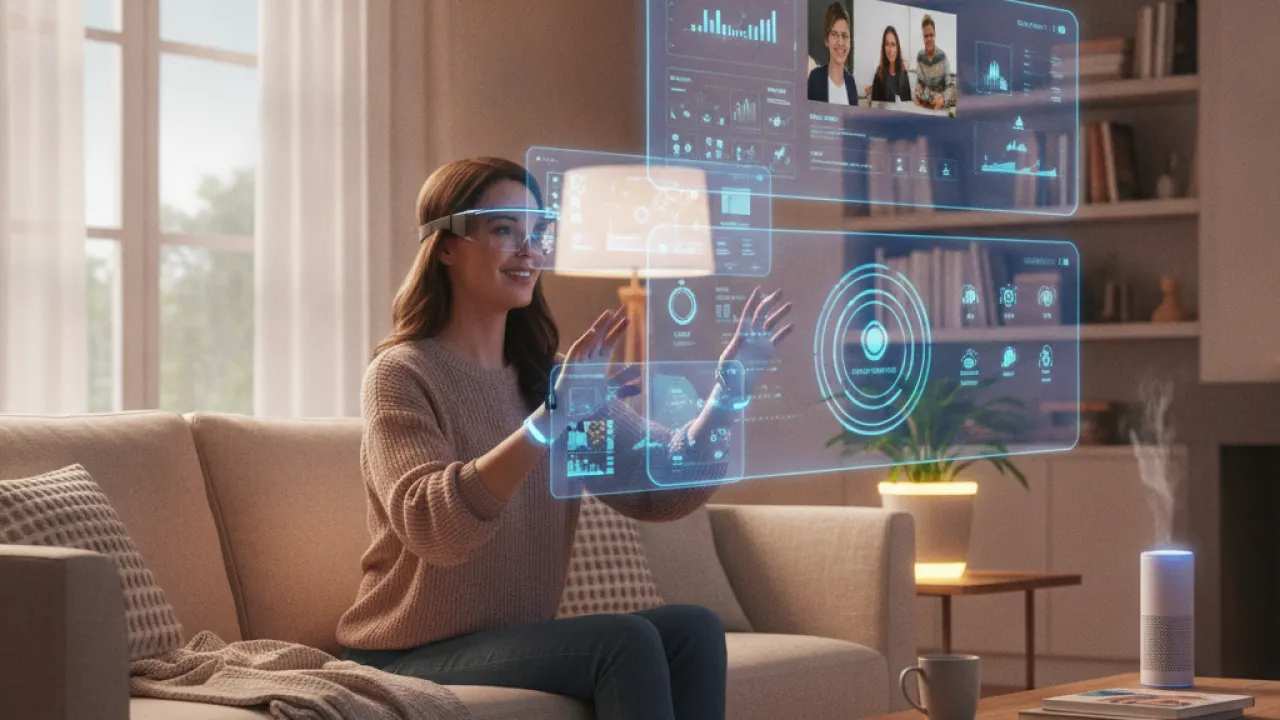
- Spatial computing is moving out of the enterprise and into consumer products as prices drop and software improves.
- AI in healthcare is producing real diagnostic tools, not just research papers, that doctors are starting to use in practice.
- Chipmaker competition between the US, Taiwan, South Korea, and China is reshaping global supply chains and trade policy.
- Biotech and longevity research is seeing serious funding and early clinical trials that could change how we think about aging.
- Cybersecurity threats are growing more sophisticated as attackers use AI to find vulnerabilities faster than defenders can patch them.
- Social media regulation is advancing in the EU and several US states, with real consequences for platforms and their users.
- Open-source AI models are closing the gap with proprietary ones, changing the economics of building AI products.
- Space commercialization is accelerating, with private companies moving toward lunar missions and orbital manufacturing.
- Digital identity systems are being rolled out in multiple countries, raising both convenience and privacy questions.
- Edge computing is putting more processing power into local devices, reducing dependence on cloud infrastructure.
How TechDeft Covers These Stories
At TechDeft, we don’t rewrite press releases. We dig into what’s actually happening, what the numbers say, and what it means for regular people. We explain the technical context without requiring a computer science degree to follow along.
We cover the full picture, including the companies that fail, the technologies that don’t work as advertised, and the stories that get buried under louder headlines. Tech news is full of noise. Our job is to find the signal.
This 2027 tech news preview is the first post in a year-long series. We’ll be back with updates on every major story as it develops. Bookmark the site and check back regularly.
What This Year Comes Down To
2027 isn’t defined by any single breakthrough. It’s defined by the fact that several important technologies are reaching practical usefulness at the same time. AI agents are doing real work. Quantum computing is solving real problems. Clean energy is winning on price. New hardware is changing what’s possible for developers and consumers.
The technology is moving fast. The regulation is moving slowly. The economic effects are already visible in some industries and barely felt in others. That gap, between what the technology can do and how society is adapting to it, is the biggest story of 2027.
We’re watching it closely, and we’ll report on it honestly. Not every prediction will be right. Not every product will deliver. But the direction is clear, and the changes are real.
If you’re trying to make sense of what’s happening in tech this year, you’re in the right place. We’ll be here all year covering the stories that matter, explaining the ones that are confusing, and cutting through the ones that are just hype.
The year is just getting started. There’s a lot to cover. Let’s get into it.
Which of the 2027 tech stories on this list are you most interested in following? Are you watching the AI agent story, the quantum computing race, or something else entirely? Drop your answer in the comments below. We read every one, and your questions shape what we cover next.
Leave a Reply